rockingham-organics.com

Organic Waste,
Real Value
Rockingham Organics is developing a
next-generation anaerobic digestion and composting facility
in Rockingham County, Virginia.
This project is designed to provide a local, long-term solution for organic waste management - serving regional industries, reducing environmental impact, and strengthening the local economy,
as we convert organic waste into renewable energy, carbon-smart soils, and enduring community value.
Our integrated system will:
-
Process organic waste from local partners, including those in the poultry, agriculture, pre-consumer food industries.
-
Convert that waste into renewable natural gas (RNG): a clean, pipeline-quality energy source
-
Produce high-quality compost to support soil health and agriculture
-
Operate as a closed-loop system, minimizing emissions, odors, and environmental impact
By keeping organic waste processing local, we reduce trucking distances, minimize carbon emissions, and give businesses a stable, predictable alternative to fluctuating disposal costs.
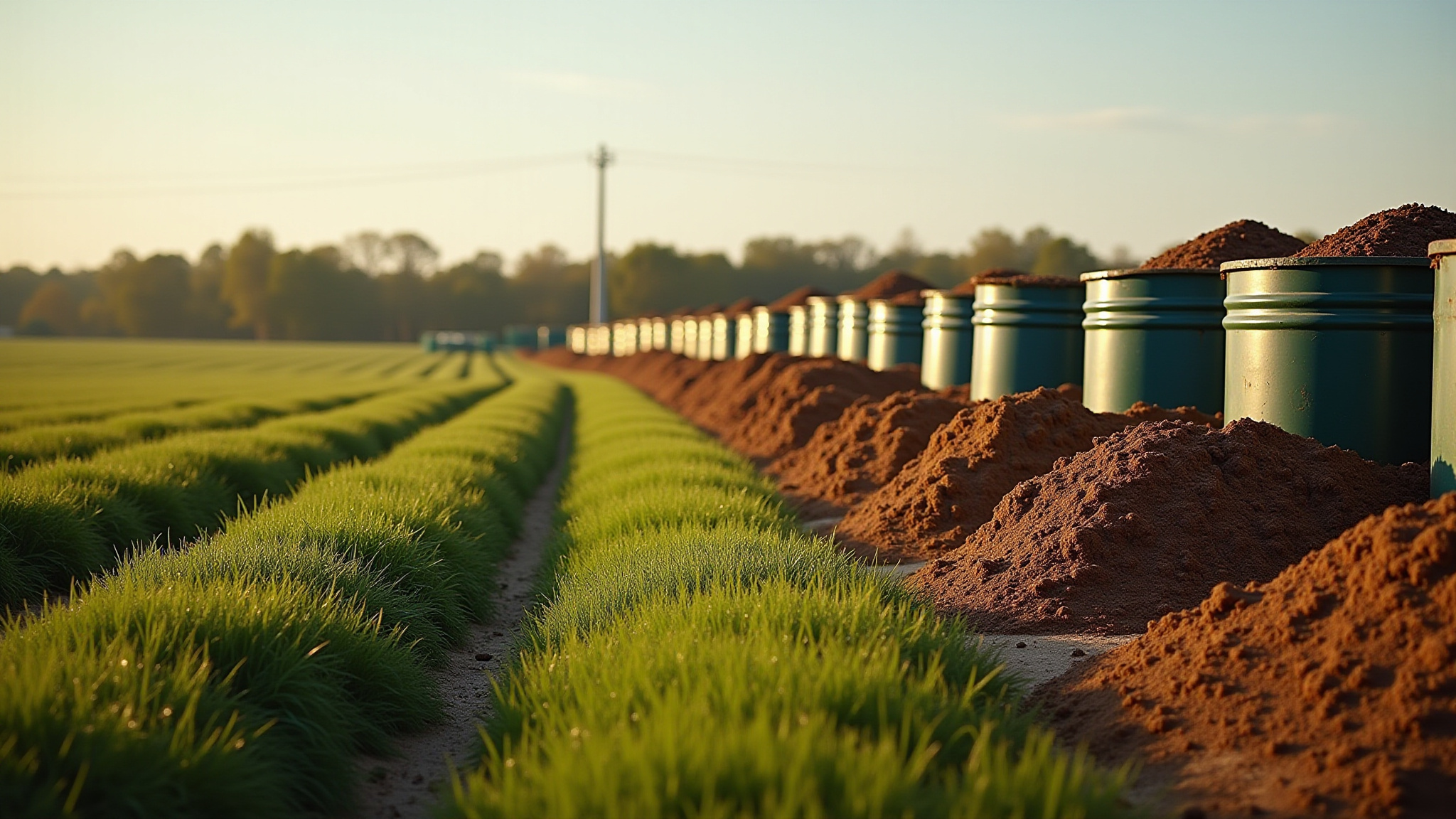
This is not just a facility,
this is an investment in the long-term resilience and sustainability of Rockingham County.
Our Mission
At Rockingham Organics, our mission is simple:
Work with nature, not against it.
We turn organic waste into value - renewable energy, carbon-smart soils, and real economic return - by aligning with the systems nature has already perfected. Our approach creates practical, efficient solutions that strengthen the communities we call home, and close the loop on organic waste.
Anaerobic digestion (AD) is a natural biological process, similar to how a cow’s stomach breaks down organic material. At an industrial scale, this process allows us to transform organic waste into energy and nutrients in a controlled, efficient, and environmentally responsible way.
Unlike traditional waste solutions like incineration or landfilling, AD uses fermentation, not burning. This results in:
-
Lower emissions
-
Reduced environmental impact
-
Cleaner energy production
-
Responsible wastewater management
While anaerobic digestion has been widely and successfully implemented across Europe,
it remains an underutilized opportunity in the United States.
We see Rockingham as the perfect place to help lead that transition.
Through this project, we aim to:
-
Support local industries with reliable waste solutions
-
Create new jobs and economic opportunity
-
Reduce environmental impact across the region
-
Contribute to a more circular, regenerative economy

Who We Are
Rockingham Organics is a locally rooted, family-driven company.
We have been working in Rockingham County since 2018, and our commitment is long-term. This project is not about outside interests—it’s about building something meaningful with and for the community.
We understand the land, the industries, and the people that make this region what it is.
Our approach is grounded in:
-
Transparency
-
Responsibility
-
Long-term partnership
-
Respect for the local environment and community
We are proud to be part of the Shenandoah Valley, and we believe this project can help strengthen what already makes this place special.
Get Involved
We welcome conversations with:
-
Local and state officials
-
Feedstock suppliers and industry partners
-
Academic and research institutions
-
Members of the Rockingham community
If you’re interested in learning more, partnering, or sharing feedback, we’d love to connect.
301.943.4860
FAQ: Anaerobic Digestion (AD)
What is anaerobic digestion (AD)?
Anaerobic digestion is a natural process where microorganisms break down organic material in an oxygen-free environment, producing biogas (methane) and nutrient-rich material.
What is renewable natural gas (RNG)?
Renewable Natural Gas is produced through the anaerobic digestion process, where organic waste is broken down to create biogas. This biogas is then purified and upgraded to pipeline-quality methane.
Will the facility smell?
Modern AD facilities are fully enclosed, controlled systems expertly designed to minimize odor. We use air scrubers and advanced filtration systems to virtually eliminate off-site odors.
How is this different from incineration?
Incineration burns waste at high temperatures. Anaerobic digestion uses biological fermentation, which is cleaner, more energy-efficient, and produces useful byproducts like compost and renewable gas.
What types of waste will be processed?
The facility will process organic waste streams, including agricultural byproducts and poultry processing waste, as well as pre-consumer food products like milks, sugars and other organic wastes.
How does this benefit local businesses?
-
Provides a local disposal solution
-
Helps stabilize long-term waste costs
-
Reduces transportation time and fuel usage
-
Supports sustainability goals
Will this create jobs?
Yes. The project is expected to create local jobs across operations, maintenance, and logistics, contributing to the regional economy.
Is this safe for the environment?
Yes. The system is designed as a closed-loop process with strict environmental controls, including wastewater management and emissions monitoring.